Tec-Do 2.0 Showcases at 2026 China Enterprise Global Impact Dialogue: CEO Li Shuhao Honored as "China Enterprises Global Impact Person of the Year"
2026-06-14From June 12 to 13, the "2026 China Enterprises Global Impact Dialogue," hosted by Jiemian-Cailian Press under the guidance of Shanghai United Media Group, successfully concluded in Shanghai. The annual forum, centered on the evolution from "product globalization" 1.0 to "brand, technology, standards, and ecosystem globalization" 2.0, drew hundreds of international organization representatives, global business leaders, and industry experts. As a leading AI martech company, Tec-Do 2.0 commanded attracted significant attention from ecosystem partners for its outstanding contributions and influence in empowering Chinese enterprises to expand globally.
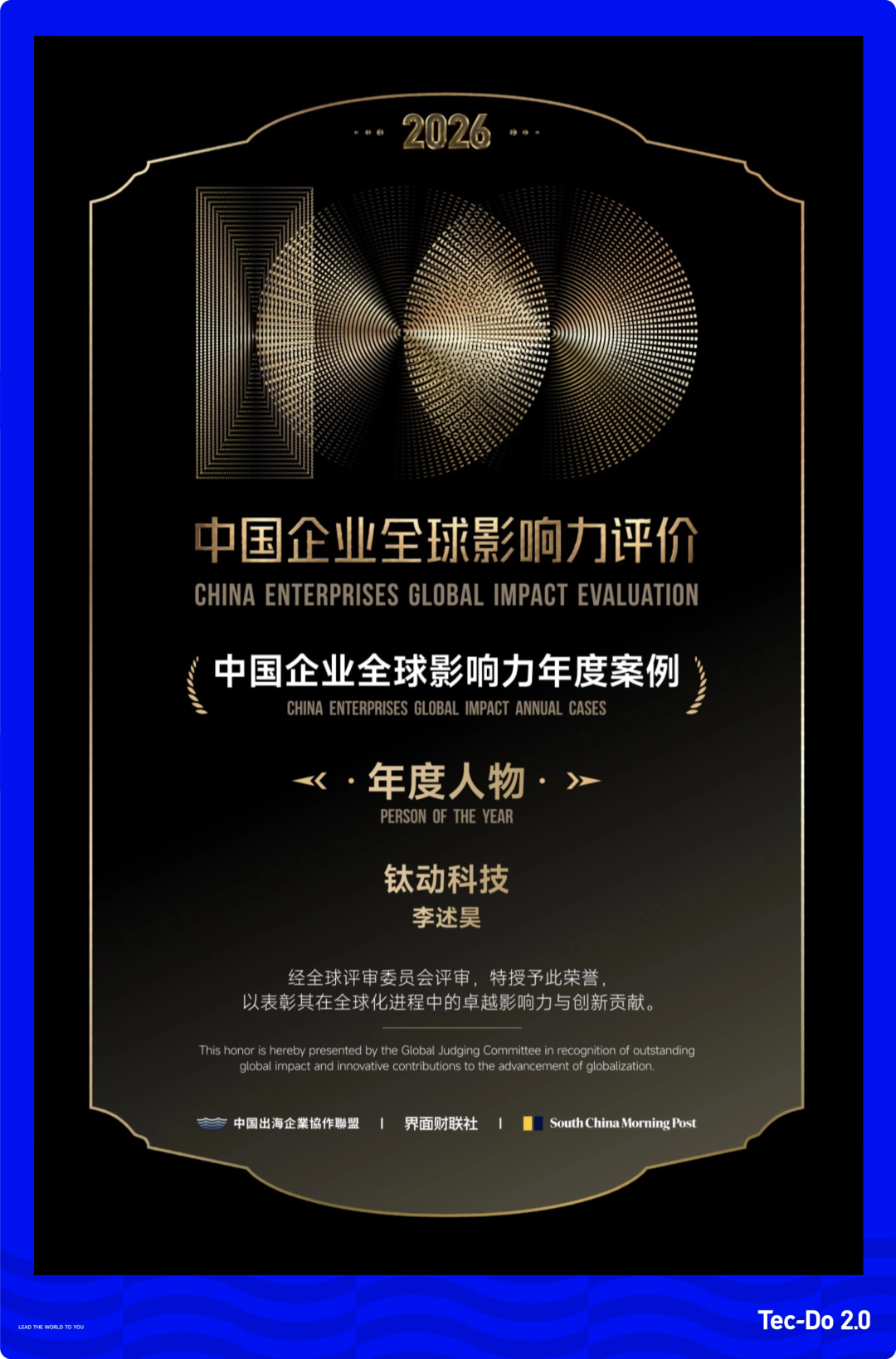
During the event, the China Enterprises Global Alliance (CEGA) and the Jiemian Cailian Intelligence Institute jointly released China's first 2026 China Enterprise Global Influence Report. Built around three dimensions — product appeal, brand perception, and local contribution — the report established a comprehensive "China Enterprise Global Influence Evaluation Framework," identifying the "Top 100 Globally Influential Enterprises" and a series of annual landmark cases. Tec-Do 2.0 CEO Li Shuhao was honored with the "China Enterprises Global Impact Person of the Year", recognizing his exceptional leadership and innovation in empowering enterprises on the global stage.
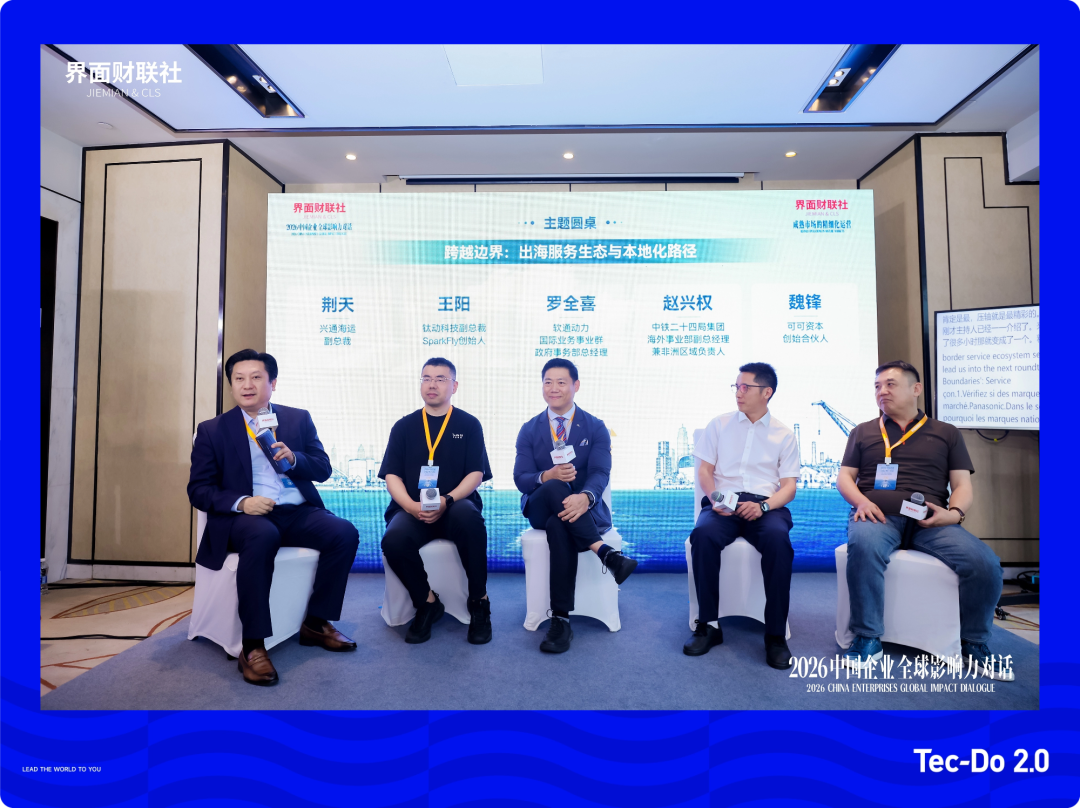
Wang Yang, Vice President of Tec-Do 2.0 and Founder of SparkFly, was among a select group of representatives from five companies invited to attend a closed-door matchmaking session. Tec-Do 2.0 engaged in substantive dialogue with government officials and industry representatives from Shanghai's Xuhui District, sharing its global expansion strategy, operational challenges, and partnership priorities.
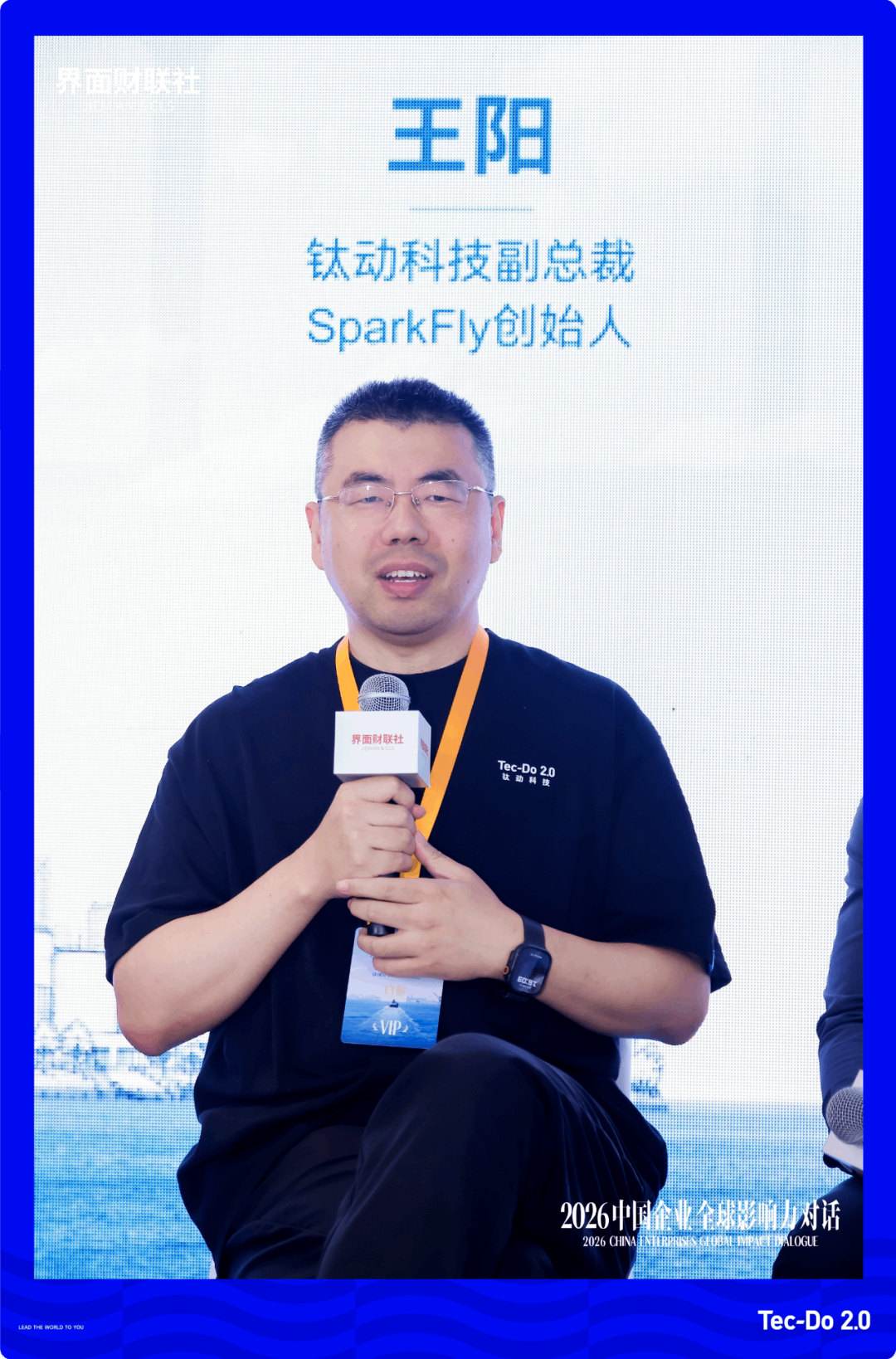
At the roundtable session themed "Crossing Borders — Service Ecosystems and Localization Pathways for Global Expansion," Wang Yang joined a group of industry leaders for in-depth discussions on cross-cultural governance, localized operations, brand value recognition, and alignment with international governance frameworks, offering a systematic articulation of Tec-Do 2.0's globalization methodology.
1·From Physical Expansion to Deep-rooted Localization
From "Labor-Intensive Scaling" to "Intelligent Collaboration"
Most enterprises have moved through two earlier phases of going global: the 1.0 stage of selling products to open up market access, and the 2.0 stage of going abroad to learn from or share expertise. They have now entered a 3.0 stage that demands a more fundamental question: What kind of company do we want to become? At this stage, enterprises must define what cultural symbol or identity they wish to represent in the world.
Yet for many companies that have already established a physical global footprint, the harder challenge lies ahead — building genuine cultural resonance, articulating values that travel across borders, and aligning with international institutional norms. Products can cross borders; brands often cannot. And meaningful cultural identity is harder still to forge. Wang Yang argued that the path forward lies in shifting from physical expansion to rooted presence, from deploying headcount at scale to enabling intelligent collaboration. By leveraging AI to decode local culture, sharpen organizational management, and accumulate brand equity, companies can make the leap from competing on price to competing on preference. The real milestone arrives when local consumers no longer see a brand as "a useful foreign import," but as something that genuinely understands them and is invested in growing alongside them.
When it comes to navigating clashes in decision-making styles, corporate culture, and local norms — as well as the perennial tension between headquarters and overseas teams — Wang Yang was candid: many Chinese companies' first instinct is still to transplant their proven domestic playbook directly onto foreign markets, which often leaves local teams struggling to adapt. Tec-Do 2.0's approach operates on two levels:
· Level one — AI-powered organizational management:
Progressively evolving toward an "AI-Native" organizational model, using AI to unify core data and business processes across all overseas subsidiaries. "Let the data do the talking — use it to find ways to serve clients better and improve business outcomes."
· Level two — OKR alignment and decentralized decision-making:
Using OKRs to align teams around shared values and phase-specific goals, while giving local teams genuine autonomy over on-the-ground decisions. "Headquarters sets the strategic guardrails. Everything within that space belongs to the local team to run with."
2·AI Bridges Cultural and Experiential Gaps
"On-the-Ground Global Presence" Infuses Business with Empathic Sensibility
As an AI marketing technology company, Tec-Do 2.0 remains focused on how to help brands communicate genuine value to local consumers and earn real respect in overseas markets.
Wang Yang stressed that companies must honestly confront three questions: What do local consumers actually want? What kind of product will truly resonate with them? And what kind of content will they actually receive? Authentic localization is not about translating Chinese content into another language. It means deeply understanding the cultural pulse of local consumers, and letting that understanding drive how content is created and delivered — so that it lands with real emotional impact.
Tec-Do 2.0 has charted a path built on "marketing multi-agent + specialized large language models," using AI to help companies bridge cultural and experiential divides, enabling global consumers to genuinely discover, connect with, develop lasting affinity for Chinese brands.
Wang Yang also highlighted a dimension that is easy to overlook: the irreplaceable value of physical presence. "You cannot separate being there in spirit from being there in person," he said. He shared his own schedule over the past four weeks — New York, Seoul, Guangzhou, Shenzhen, London — describing frequent cross-border travel as an indispensable practice for truly understanding local markets.
AI-powered data analysis provides the rational foundation for market insight. But showing up in person gives business relationships their human warmth. The two are inseparable — only by combining rigorous data with genuine human connection can a company build the trust and cultural bonds that truly last.
3·Long-Termism
The Key for Chinese Enterprises to Win the Future
Looking back at China's reform and opening-up, its essence was playing by international rules and earning respect through sound values, tradition, and cultural strength. When asked what single word or phrase he hoped would define enterprises in the global arena twenty years from now, Wang Yang's answer was clear: long-termism.
He recalled that as far back as 2017, Tec-Do 2.0 made a significant early commitment to AI and technology R&D — and has never wavered from its founding belief in "Tec-Do Business": building a technology-driven enterprise from the ground up. It is precisely this long-term conviction that has positioned the company to unlock the value of AI at scale in today's AI era. His view: get the product quality right, build genuine brand value in local markets, and the long-term returns will follow.
From going out to going deep — China's globalization journey is, at its core, a civilizational dialogue that crosses geographic, cultural, and cognitive boundaries. True global influence is not measured by sales volume alone. It is built through resonance of values and the steady accumulation of trust.
Tec-Do 2.0 is committed to empowering brands to navigate this deeper challenge through long-termism: setting aside short-term noise, respecting the unique character of every local market, and transforming enterprises from outsiders forcing their way in into trusted co-builders of the global business ecosystem.
END